 Jakob Wolman
Prescriptive agile models, such as Scrum, preach that a co-located, strong team will bring success. I believe this is an old paradigm. In a recent post I explored what it means to have a distributed team.
In this post I want to kill the myth of the everlasting team.
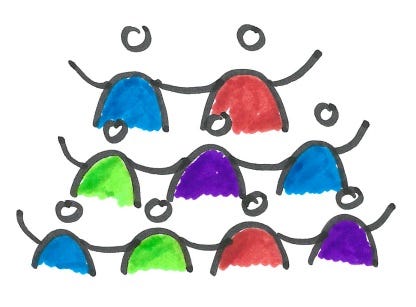
Everlasting teams
Agile usually comes with the myth of the everlasting team. A strong, stable team that continuously improve with every iteration. The team is so stable they can estimate their work, create burndown charts, predict when they will be done and plan several iterations ahead. If the world around them changes, it is preferred to keep this strong team intact and give them another backlog to burn. In this mythical team, everyone is completely focused on the task they are doing and always working at their maximum capacity.
Doesn’t work that way
I believe the everlasting team is a myth. As with most myths, there is some truth in it. We would like to have strong teams that keep together forever. Like a machine that just keeps burning stories wherever they go. In my experience, this is not how teams work. The longest time I have spent with a more or less intact team is about a year, until the team was broken up.
In my experience reality comes knocking just after you have put the team together. Life happens in terms of vacation, illness, new assignments, sick kids and everything else that goes on in a busy life. The organisations I have experienced seldom respect the everlasting team.
Just as in life, reality hits companies. Priorities change, shit hit fans and new opportunities emerge. We know that humans are complex creatures. That means systems consisting of humans (organisations and societies) are even more complex. In this complex world I think it is impossible for a team to stay intact.
It is about expectations
As with distributed work I believe the key to strong teams is expectations. Already when chartering the team we know that change will happen so we might as well prepare for it. Working agile is of course a great way to be adaptable to change. I especially like what the modern agile movement is suggesting:
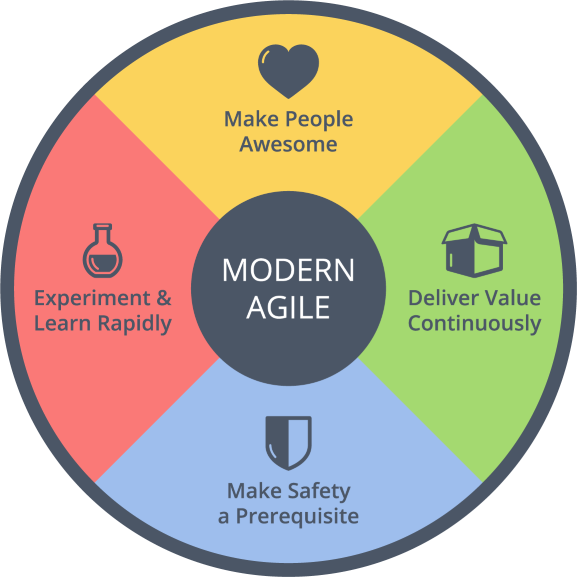
The customer does not really care what team created the product, as long as the product brings value. Therefore, the focus should be on delivering value, not team. That said, I still believe in investing in making teams awesome. Great teams create great value. Great teams create great environments to work in. Great teams learn and continuously improve.
Great teams are the perfect environment for individuals to grow. Many of these things should be achieved on an organisational level, not only at the team level. We need to create an environment for the whole organisation, not locking people into teams.
I am also a strong believer in finding and building on people’s intrinsic motivation. In the right environment, people that get to do something they truly believe in will excel.
Therefore I think we should trust people to choose what they want to work on. Keep building teams and help them improve, but look beyond just the team. Zoom out and look at the whole organisation, the whole system. Create an environment where people can excel, and expect that a team constellation is short lived.
Sometimes the team sticks together for a longer period, and that is great, but do not expect that to be an exception rather than a rule. Make sure the organisation can learn and adapt to new challenges.
Leading teams in this paradigm requires a different style and a different tool set than with the everlasting team. The focus on environment, individuals and organisation calls for more from the leadership. This is a topic I look forward to exploring in future post. To sum up:
Instead of expecting everlasting teams, build great organisations and trust that the team will live as long as it is needed.